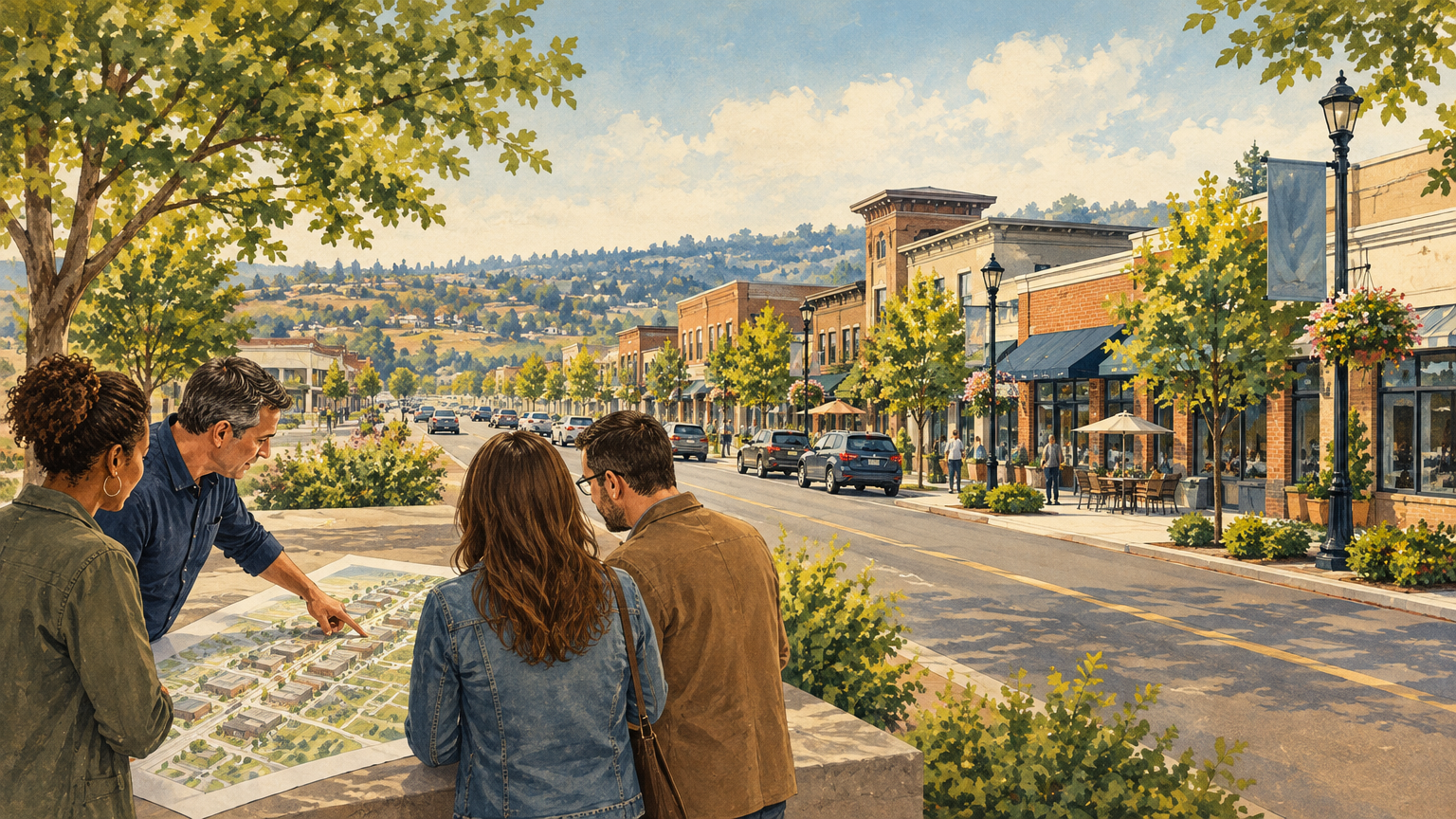
The Folsom City Council approved the Central Business District Vision Plan on November 12, 2024, establishing a long-term framework for the area along East Bidwell Street from Riley Street to Blue Ravine Road. The plan comes as Folsom's population has grown by 16,000 residents since 2010, outpacing regional growth, and will guide future public infrastructure and private development as funding becomes available. While no specific projects are proposed yet, homeowners and business owners in the district should monitor upcoming implementation phases that could affect property values, traffic patterns, and neighborhood character.
The Vision Plan represents a 10- to 20-year framework designed to align land use, public infrastructure, and district branding with community values. The Central Business District generally spans the East Bidwell Street corridor between Coloma Street and Blue Ravine Road, with the broader planning area extending between East Bidwell and Riley streets. This corridor has become increasingly important as Folsom's population reached 88,139 in 2023, growing faster than both Sacramento County and the broader Sacramento metropolitan area.
The plan emerged from a year-long collaborative process. The City Council formed the Central Business District Advisory Committee on August 22, 2023, appointing 18 stakeholders from business, property ownership, residents, transportation, tourism, education, and other sectors. The committee met eight times over approximately one year, and its recommendations were incorporated into the final Vision Plan approved this month.
Importantly, no specific development project or land-use change is proposed in the plan itself. Future public and private improvements would be pursued as funding becomes available, meaning implementation will unfold gradually over the coming decades rather than through immediate construction projects. This approach gives property owners and residents time to engage with specific proposals as they develop.
Among the plan's recommended actions is hiring a specialized design firm to develop a retro-themed identity, signage, and wayfinding program for the district. This branding effort could potentially include a new district name, creating a more cohesive identity for the East Bidwell corridor that distinguishes it from other commercial areas in Folsom.
The plan also identifies partnership opportunities involving regional and local economic-development organizations, commercial real-estate brokers, public and private initiatives, grant funding, and infrastructure investments. These partnerships will be critical to implementing the vision without placing the entire financial burden on city coffers or individual property owners.
For homeowners near the Central Business District, the plan's approval signals the city's commitment to thoughtful development in this corridor rather than ad hoc changes. Property values in areas adjacent to well-planned commercial districts often benefit from improved infrastructure and amenities, though the timeline for specific improvements remains uncertain.
Business owners and commercial property investors should pay attention to upcoming implementation phases, particularly the branding initiative and any infrastructure improvement proposals. The plan creates a framework that could make the district more attractive for certain types of retail and service businesses, potentially shifting the competitive landscape over time.
As Folsom continues absorbing population growth that has outpaced the region, the Central Business District Vision Plan provides a roadmap for managing development pressure in this key corridor. Residents and property owners should expect the city to reference this framework when evaluating future development applications and infrastructure projects along East Bidwell Street, making it a useful document for anyone looking to understand the long-term direction of this part of Folsom.